
Guide to the Northern Lights in Nova Scotia: How To Experience the Aurora Borealis from Halifax

The dancing lights of the aurora borealis are a bucket list experience. For many, it’s something they’ll only witness once in their lifetime. For others, it’s simply part of life. In Nova Scotia, while not common, aurora sightings do happen. Especially during periods of high solar activity.
Compared to remote northern hotspots, Nova Scotia is far more accessible. You won’t need to travel into the Arctic Circle. And while your chances of spotting the northern lights here are much lower, the province's mix of coastal lookouts, dark skies, and scenic backdrops still makes it a worthwhile place to try your luck.
But catching the northern lights takes some planning and patience. Conditions have to line up just right. To help you make the most of your chances, we’ve put together this guide focused on the best ways to experience the aurora borealis from Halifax and beyond.
What Are the Northern Lights (Aurora Borealis)?
For thousands of years, the northern lights have captivated civilizations across the Northern Hemisphere. In many ways, they’ve helped shape Canada’s cultural heritage, influencing the beliefs and stories of the land’s early societies.
And while we now know that this natural phenomenon is caused by charged particles from the sun colliding with gases in Earth’s atmosphere, the display is no less magical. That said, this knowledge makes the aurora a little more predictable. Something we can use to our advantage.
One of the best ways to track the northern lights is by following the KP index. This number, which ranges from 0 to 9, measures geomagnetic activity. The higher the number, the better your odds. When the KP index hits 5 or above, Nova Scotia becomes a possible contender for a sighting.
When Can You See the Northern Lights in Nova Scotia?
The best time to view the northern lights in Nova Scotia is between September and March. During this time, nights are longer, the skies are darker, and the conditions are just overall better. September, October, and March are especially good months, since they line up with the fall and spring equinoxes, when geomagnetic activity tends to spike.
But solar activity alone isn't enough. You'll also need the right weather. Cold, clear nights are ideal. If there's too much cloud cover or fog, you won't see much. No matter how active the sky is.
So if you're planning a trip, look for a stretch with clear skies, check the KP index, and try to get away from the city lights. When it all lines up, Nova Scotia can offer a seriously impressive show.

Best Places to See the Northern Lights Near Halifax
You don’t necessarily have to travel far to try your luck. While auroras are rare in the city itself, there are a few local spots where you’ll have a better shot, especially during a strong geomagnetic storm.
Fisherman’s Cove, Peggy’s Cove, and York Redoubt are some of the best options near Halifax. They're far enough from the city’s core to reduce light pollution and offer open views of the sky. These locations are popular with photographers for a reason.
Anywhere along the coastline can work, especially when facing north over open water. Just keep in mind that visibility in the city is only likely during stronger KP 5+ events. For better odds, aim to get farther away from urban lights.
Top Northern Lights Viewing Locations Across Nova Scotia
While the aurora borealis can be spotted from Halifax, the northern lights are at their most striking once you leave the city and its bright streets behind.
If you're up for a bit of a drive, Nova Scotia has some incredible dark sky spots that give you a much better shot at seeing the aurora. Most of these locations are outside city limits, and a few require a park pass or have limited hours, so it's worth checking ahead.
- Kejimkujik National Park is one of the top picks. It's a designated dark sky preserve, located in the southwest of the peninsula, and sees up to 100 nights of visible auroras during the fall and winter. It's remote, quiet, and ideal for stargazing.
- Cape Breton Highlands National Park is another strong option. Places like Meat Cove and Cheticamp offer great northern exposure and almost no light pollution. Meat Cove, in particular, sits at the northern tip of Cape Breton Island and offers wide-open views of the sky.
- Five Islands Provincial Park is a solid choice if you're staying more central. It has sand dunes, coastal views, and a clear horizon over the water. It checks all the boxes when you're chasing auroras.
- Port Maitland Beach is also worth checking out. It's peaceful, has wide ocean views, and sits far from urban glow.
In general, the farther north and farther from the city you go, the better your odds. The skies are darker, and you're closer to the edge of the auroral oval. Both can make the difference between a quiet night and a show you won't forget.
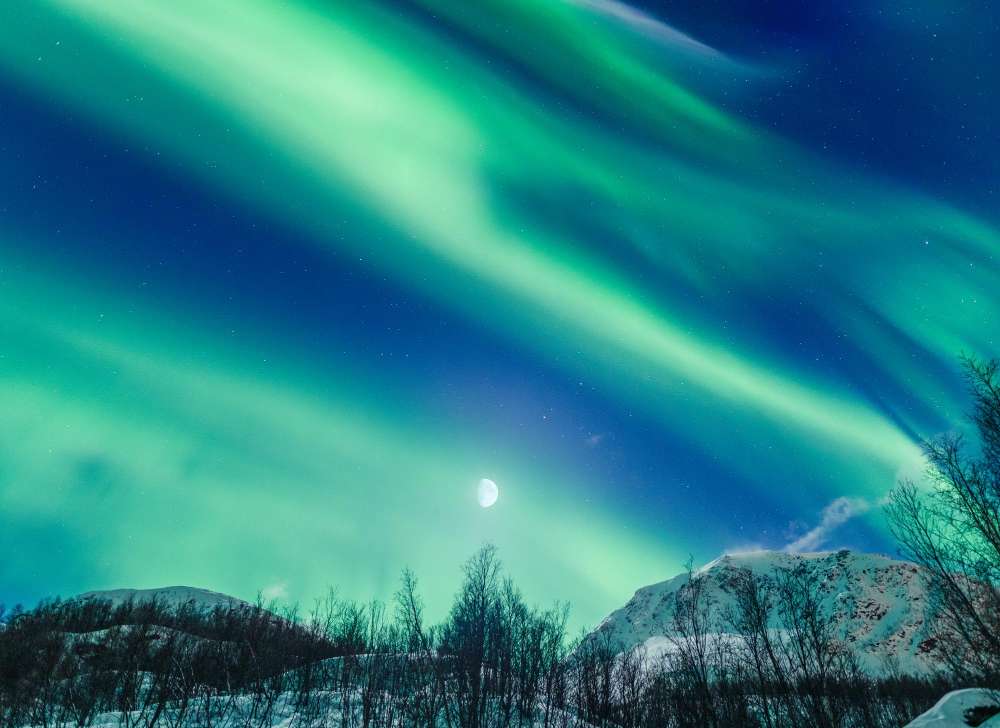
How Nova Scotia Compares to Other Aurora Destinations in Canada
Nova Scotia isn’t one of Canada’s top aurora destinations. That title goes to places like Yukon, Northwest Territories, or northern Manitoba, where auroras appear regularly.
That said, Nova Scotia has a few advantages. It’s far more accessible. You can plan a short trip without flying into the far north, and you won’t need to pack extreme cold-weather gear.
While it's farther from the auroral oval, Nova Scotia still gets activity when solar storms are strong enough. And when the lights do appear here, the coastal scenery, forest backdrops, and rolling hills make for a truly unique viewing experience.
How to Capture the Northern Lights on Camera
If you're travelling all the way here to see the northern lights, you're going to want to capture the moment. Not just in memory but on camera. The only problem? The aurora can be famously difficult to photograph.
For the best shot, use a tripod and a camera or smartphone that supports long exposure. This allows it to collect more light than the human eye can on its own. Then, head somewhere truly dark. And I mean dark. Ideally, you'll want to visit one of Nova Scotia's national parks or dark sky preserves. Kejimkujik National Park and National Historic Site is one of the best.
Once you're set up, adjust your camera to these settings:
- ISO: 800–3200
- Exposure: 10–20 seconds
- Aperture: f/2.8 to f/4
With all that in place, you've got a solid shot at getting the photo. Just keep in mind that even the best image won't compare to seeing it in person.

Where to Stay and What to Expect
There are a lot of places you could stay when chasing the northern lights in Nova Scotia, but we suggest sticking with Halifax. It puts you in the middle of it all, so you're not tied to just one viewing spot. You're a short drive from Peggy's Cove, York Redoubt, and Crystal Crescent Beach, and if the forecast shifts, you've got the flexibility to head east or west without much hassle.
If you're looking for a place to stay in the city, Cameo Hotel & Suites is a solid option. It's right downtown, close to the waterfront, and makes for an easy jump-off point no matter where the skies take you.
Travel Tips for a Smooth Aurora Viewing Experience
Before you head out, there are a few things worth keeping in mind. Chasing the northern light displays isn't always easy, but with the right prep, you'll set yourself up for a much better shot.
- Dress for the cold. It gets chilly fast once you're standing still. Layers, gloves, and insulated boots are a must.
- Bring a tripod and a headlamp (preferably one with a red light setting), along with backup batteries for your camera or phone.
- Get away from city lights if you can. Dark sky preserves, and remote beaches give you the best chance of a clear view. That said, during high solar activity, even urban edges like York Redoubt can work.
- Drive carefully. Winter roads can get slick, especially late at night. Keep an emergency kit in the car, just in case.
- Be patient. The aurora doesn't always show up when or where you expect. Flexibility goes a long way.
- Respect the space. If you're in a park or natural area, follow the rules and leave no trace behind.
And lastly, take it in. Even if the lights don't show, you're still under a night sky full of stars, with the ocean nearby and the quiet all around. That's worth the trip on its own.